
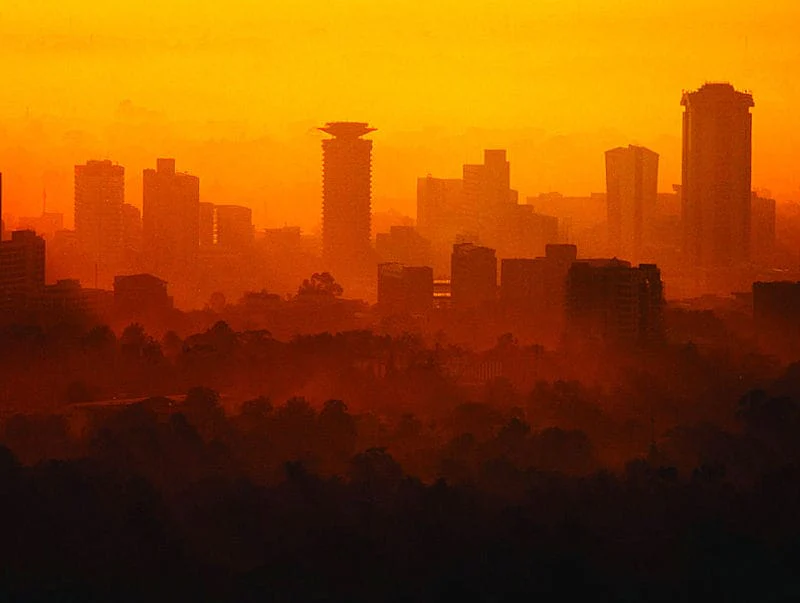
Skin in the City: How air pollution in Africa is changing the skincare game
In cities across Africa, urbanisation and climate change have converged to create new challenges for skin health. While terms like “climate-smart technology” and “climate-adaptive formulation” may seem like the latest buzzwords in skincare, they trace their roots back to 2019, when industry experts began to notice the effects of pollution and extreme weather on skin health. Since then, the climate’s impact on skincare has evolved into a well-defined trend, with brands not only offering tailored solutions for different climates, but also innovating products that strengthen the skin barrier and protect against environmental stressors. And now, as urban populations surge, African cities, with their unique environmental dynamics, are a front line for understanding how climate and pollution impact skin.
The climate change and pollution nexus: why it matters for skin
The world is heating at record levels. Heatwaves, droughts, floods, and wildfires are more frequent and intense and are the hallmarks of our new weather normal. For Africa, this is particularly concerning as the continent is disproportionately affected by the effects of climate change. Between 2000 and 2019 for example, Africa experienced 134 droughts, 70 of which were in East Africa. Elevated temperatures are also responsible for increased rates of ozone layer depletion, with higher ultraviolet radiation registered in South Africa and Nigeria. Combined, rising temperatures and the increased frequency of extreme weather events amplify the presence of dangerous particulate matter (a mixture of solid particles and liquid droplets in the air) and carbon emissions in the air, which are a disaster for overall health, and particularly skin health.
Our skin serves as the frontline barrier, protecting us from environmental stressors and adapting to a range of conditions. Historically, it’s been highly resilient, but the compounding results of climate and urban environments have resulted in our skin being “exquisitely sensitive” to climatic shifts.
The range of pollution effects on the skin is quite broad, potentially leading to dehydration, disruption of the skin microbiome, skin barrier damage, premature ageing, and even endocrine disruption and skin cancer. Moreover, it can cause the worsening of existing skin conditions such as acne, contact dermatitis, eczema, and psoriasis.
Unique challenges of African urbanisation and skin health
Africa’s urban population is growing at a rapid pace, outpacing urban infrastructure and intensifying pollution-related challenges. By 2050, Africa’s urban population is projected to nearly triple, reaching 1.2 billion people, with cities like Lagos, Nairobi, and Kinshasa among the fastest-growing urban centres globally.
The urbanisation conundrum is as much a numbers challenge as it is an infrastructural one, as rapid expansion often leads to informal settlements and densely populated residential areas. Unfortunately, the infrastructure in many of these cities lacks the capacity to handle increased levels of air pollutants caused by high industrial activity, traffic congestion and waste burning. Without sufficient green spaces to help filter pollutants and limited zoning to separate industrial and residential areas, urban pollutants such as vehicle emissions, industrial waste, and household pollutants accumulate close to where people live. This intensifies daily exposure to airborne pollutants that settle on the skin.
The impacts on skin health are severe. Persistent exposure to air pollution clogs pores and inflames skin, reducing the skin’s ability to recover and repair itself effectively. In coastal regions with high humidity, the combination of heat and pollution traps particulate matter closer to the ground, intensifying skin irritants.
Recent studies suggest that urbanisation and environmental shifts across African cities are contributing to a rise in skin-related conditions. The combination of increased air pollution and lifestyle factors associated with urban life, are fostering conditions that may lead to higher incidences of skin irritation and sensitivity among African populations. For instance, atopic dermatitis, historically less prevalent in African populations, has seen rising incidence rates that are likely influenced by these changing urban environmental factors.
The role of climate-specific conditions
Africa’s diverse climates—ranging from tropical and humid in West and Central Africa to arid and semi-arid in North and East Africa—interact with urban environments in ways that amplify pollution’s effects on the skin. The urban heat island effect, common in sprawling African cities, exacerbates this by creating localised temperature spikes, often 1-3°C higher than in surrounding rural areas. This elevated heat not only contributes to premature skin ageing but also increases the risk of dehydration, making skin less able to repair itself against pollutants and UV damage.
In coastal cities such as Accra and Mombasa, the tropical climate amplifies these effects; the heat opens pores and increases sweat production, making skin more susceptible to the infiltration of airborne pollutants and bacterial growth. In arid climates, such as those found in northern African cities like Cairo, high levels of UV exposure, compounded by urban dust and industrial particles, accelerate skin damage through oxidative stress, weakening the skin’s resilience over time.
The future of skincare in African cities: Opportunities for innovation
As urban populations grow, the demand for anti-pollution skincare products has surged. The size of the anti-pollution skincare market was valued at approximately USD 7.5 billion in 2023 and is likely to cross the USD 15 billion threshold by the end of 2032. Such is the demand that brands such as L’Oreal and Paula’s Choice have launched dedicated anti-pollution product lines.
These conditions create a unique set of challenges for skincare in African cities, emphasising the need for pollution-resistant and climate adaptive solutions tailored to the region’s specific environmental conditions. Effective solutions would ideally focus on strengthening the skin barrier to resist pollutants, maintaining hydration in both humid and arid environments, and incorporating antioxidants to combat oxidative stress caused by pollutants and UV exposure.
There is a significant opportunity for skincare brands to develop climate-resilient formulations using locally sourced ingredients. For example, ingredients like rooibos, baobab, and marula have natural antioxidant properties that can protect skin against pollution and oxidative stress.
A call for climate-dirven skincare solutions
The evolving relationship between urbanisation, climate change, and skincare in Africa demands a proactive approach from skincare professionals, brands, and policymakers. While pollution and extreme weather challenge skin health, they also open doors for innovation in the skincare industry. By prioritising climate-responsive skincare solutions, brands can play a role in educating consumers and addressing the unique environmental stressors facing urban skin across Africa. The future of skincare in African cities lies in meeting the needs of consumers facing new challenges in an ever-changing environment.



Leave a Reply