Decoding Skincare Labels: What Consumers Need to Know
In the fast-paced and ever-evolving skincare industry, consumers are increasingly savvy, yet many still struggle to navigate the complex and often confusing world of skincare labels. As a skincare professional, understanding what causes this confusion is crucial. It not only empowers you to guide your customers more effectively, but also informs how you can improve product marketing and packaging to build trust and credibility with your audience.
Understanding Consumer Confusion
Skincare labels are meant to inform, but they often end up overwhelming consumers. A 2023 research study by global skincare brand Simple found that 79% of consumers reported feeling confused by skincare and 77% believe that the skincare industry is flooded with misinformation.
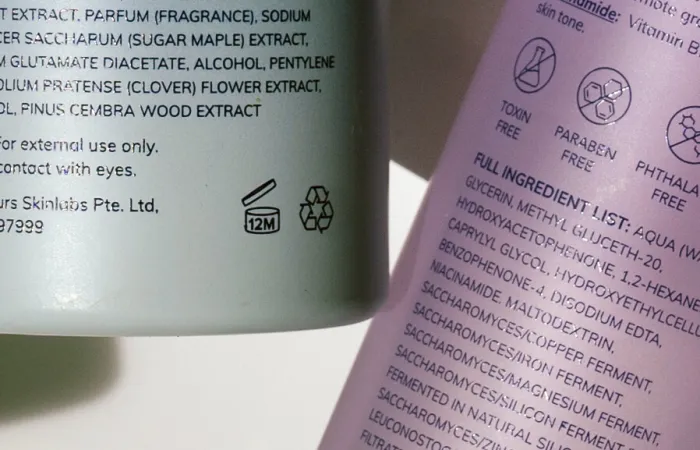
One of the leading causes of this confusion is the ingredient maze. Ingredient lists can often feel like a foreign language, packed with scientific names and complex terms that leave consumers wondering what’s actually inside the bottle. Research shows that two-thirds of women want more transparency from their skincare packaging. And yet, the presence of unfamiliar or synthetic-sounding ingredients fuels scepticism about whether products are safe, and has spurred a rise in “free-from” marketing.
Similarly, skincare buzzwords and marketing claims are a cause for confusion among consumers. Terms like “natural”, “organic,” “hypoallergenic,” and “dermatologist-tested” are frequently used on skincare packaging but are not always clearly defined, understood or regulated. Data shows that 79% of beauty shoppers have doubts about brands’ sustainability claims. The industry has been criticised for capitalising on this knowledge vacuum to engage in problematic advertising termed as “science-washing”[1] or “scienceploitation”[2]. In western markets, such practices are leading to mounting pressure for more regulation. However in Africa, where no strong regulatory frameworks on ethical or sustainable labelling exist, some marketing practices have been described as “deceptive”.
As consumers become more educated on their skin, they are taking a more clinical approach to their skincare, prioritising effectiveness high on their agenda. One signal for this is the percentage of active ingredients in a formulation. Active ingredients like retinol or vitamin C are skincare heroes, but their potency depends on the right amount. When consumers aren’t sure what those percentages mean, it’s easy for them to question a product’s effectiveness (if they perceive a number to be too low) or to overestimate an ingredient’s efficacy in a particular formulation, leading to disappointing results and in the end, eroding trust.
Manufacturing Beauty Transparency
Beauty transparency is likely to be shaped by a combination of regulatory pressure, consumer demand, and technological innovation, all aimed at ensuring that consumers have access to accurate and trustworthy information about the products they use on their bodies. Over the last few years, this has led to a rise of independent and brand-specific ingredient dictionaries that attempt to decipher the jargon for consumers.
Social media platforms like TikTok have played a pivotal role in making skincare knowledge more accessible to the public. Consumers can now easily access reliable information from dermatologists and skincare professionals without leaving their homes. The hashtag #DermTok, for instance, has more than 346 million posts[3] where experts share insights, debunk common myths, and provide evidence-based advice, all while maintaining an entertaining and relatable approach. This shift to democratise skincare has empowered consumers to make more informed decisions, transforming how people engage with skincare education. Many TikTok dermatologists have amassed massive multi-million person followings and built lucrative income streams from these engagements, to the concern of some.
This increasing consumer demand for detailed information about the ingredients, sourcing, and manufacturing processes of beauty products is being driven by a growing awareness of the potential health and environmental risks associated with many of the chemicals used in cosmetics and personal care products.
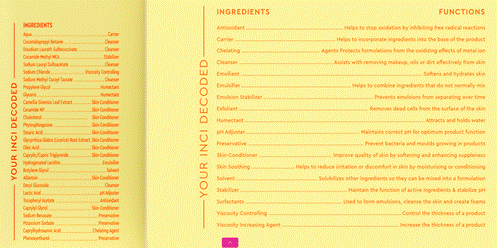
Source: BYOMA
One company committed to demystifying ingredients for its consumers is skincare brand BYOMA. Each product listing on their website is accompanied with a “your inci decoded” section that lists each ingredient and its corresponding function. While brands such as GLOSSYBOX choose to highlight key ingredients and reason behind their inclusion in the formula.
The beauty transparency revolution represents a significant shift in the industry as consumers prioritise ethical and sustainable practices, and companies who respond by being more transparent about their products and processes will see higher numbers of customer attraction and retention.
[1] Described as “using science in areas where science can’t tell you the answer,” “making claims beyond what the evidence shows,” and “eagerness to accept claims that seem scientific without critical appraisal”.
[2] Occurs when popular scientific ideas, such as stem cells are used to take advantage of the social capital associated with them to induce consumer interest in products or services.
[3] At time of publication


Leave a Reply